


Omega Centauri
NGC5139
Technical data
| Instrument: | 173/700 Newton-astrograph (ZsIO), SkyWatcher comacorrector F/4 |
| Camera: | Atik One 6.0 |
| Filter: | Astronomik Deep-Sky LRGB, Astronomik L1 |
| Mount: | SkyWatcher NEQ6 Pro Synscan (modified) |
| Guiding: | Lacerta M-Gen autoguider, OAG |
Image data
| Exposure time: | LRGB: 4 x 4 x 3 mins |
| Location, date: | Namíbia, Isabis-farm 2018.05.08 |
| Transparency: | 10/10 |
| Temperature: | 8 °C |
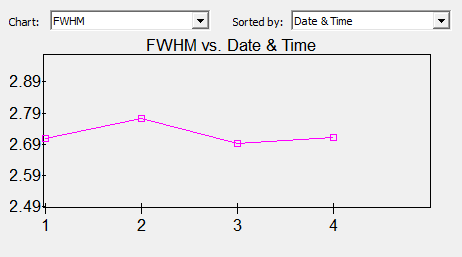
| FWHM: | 2.70" |
| Processing: | CCDStack, Registar, Pixinsight 1.8, Photoshop |
Description
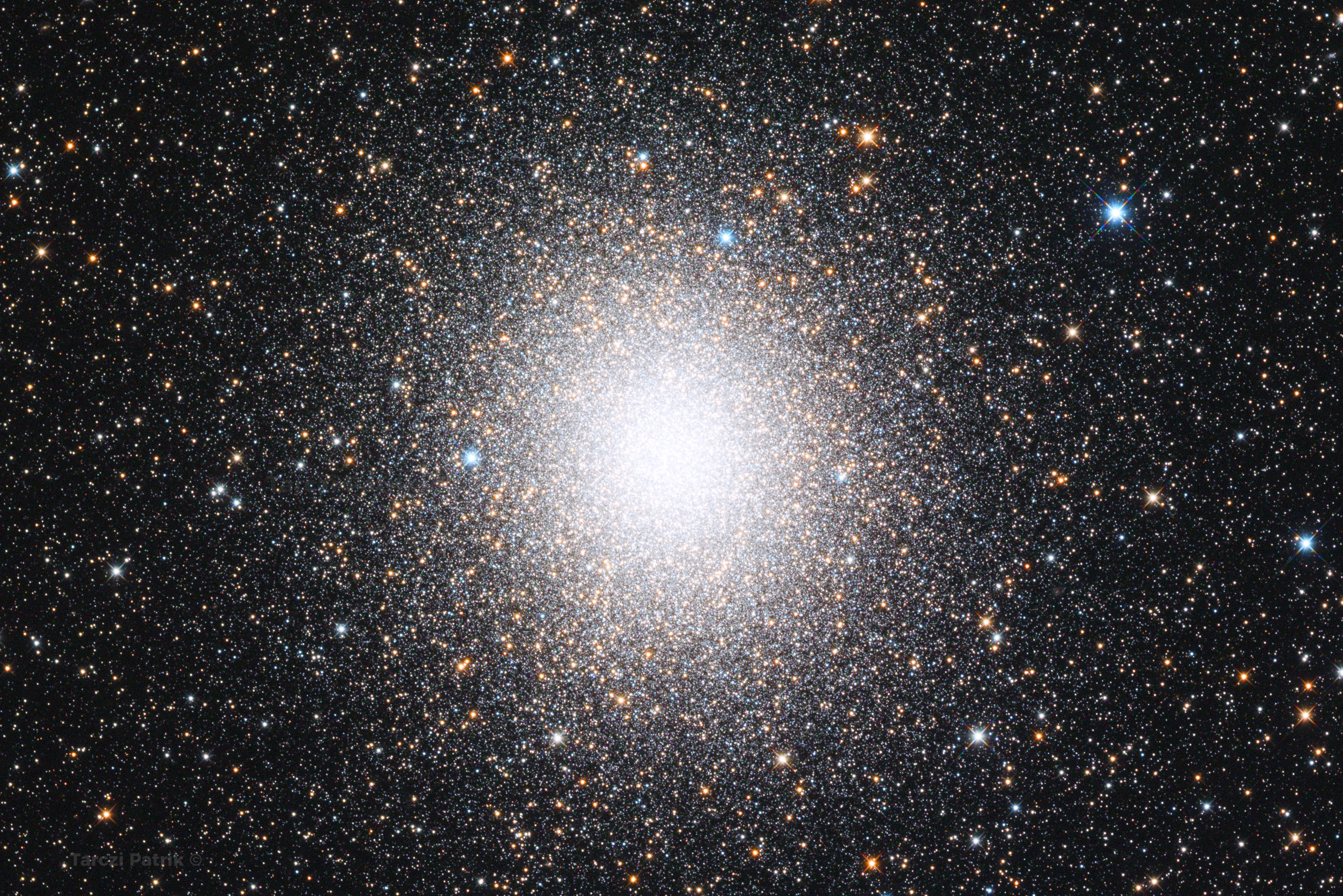
Omega Centauri, our brightest global cluster is located in constellation Centaurus, It is the biggest global cluster can be seen from Earth at a disctance of 15 800 light-years. Edmond Halley discovered it in 1677.
Omega Centauri is so distinctive from the other galactic globular clusters that it is thought to have an alternate origin as the core remnant of a disrupted dwarf galaxy.
Technical data
| Instrument: | 173/700 Newton-astrograph (ZsIO), SkyWatcher comacorrector F/4 |
| Camera: | Atik One 6.0 |
| Filter: | Astronomik Deep-Sky LRGB, Astronomik L1 |
| Mount: | SkyWatcher NEQ6 Pro Synscan (modified) |
| Guiding: | Lacerta M-Gen autoguider, OAG |
Image data
| Exposure time: | LRGB: 4 x 4 x 3 mins |
| Location, date: | Namíbia, Isabis-farm 2018.05.08 |
| Transparency: | 10/10 |
| Temperature: | 8 °C |
| FWHM: | 2.70" |
| Processing: | CCDStack, Registar, Pixinsight 1.8, Photoshop |
Recommended photos
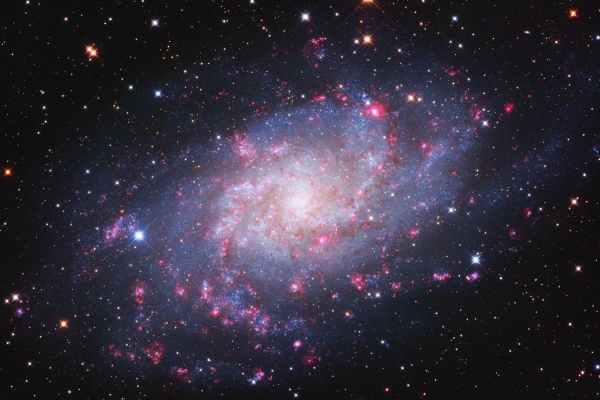
The Triangulum Galaxy
The Triangulum Galaxy is the brightest galaxy of the constellation Triangulum, which is just visible to the naked eye.
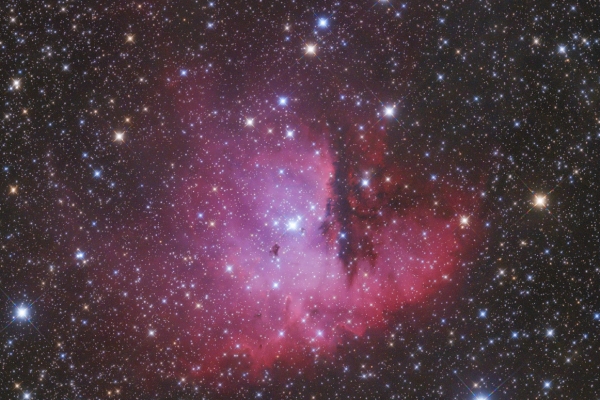
The Pacman Nebula
In the '80 years living a succes game is called Pacman. The Pacman Nebula got its name after the protagonist of the game.
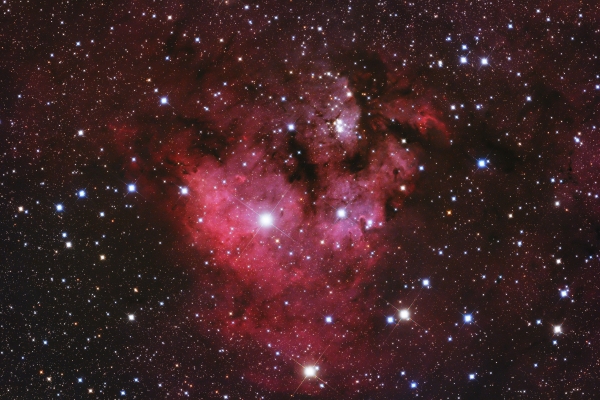
The Devil's Head Nebula
Towering pillars of cold gas and dark dust adorn the center star forming region of Sharpless 171.